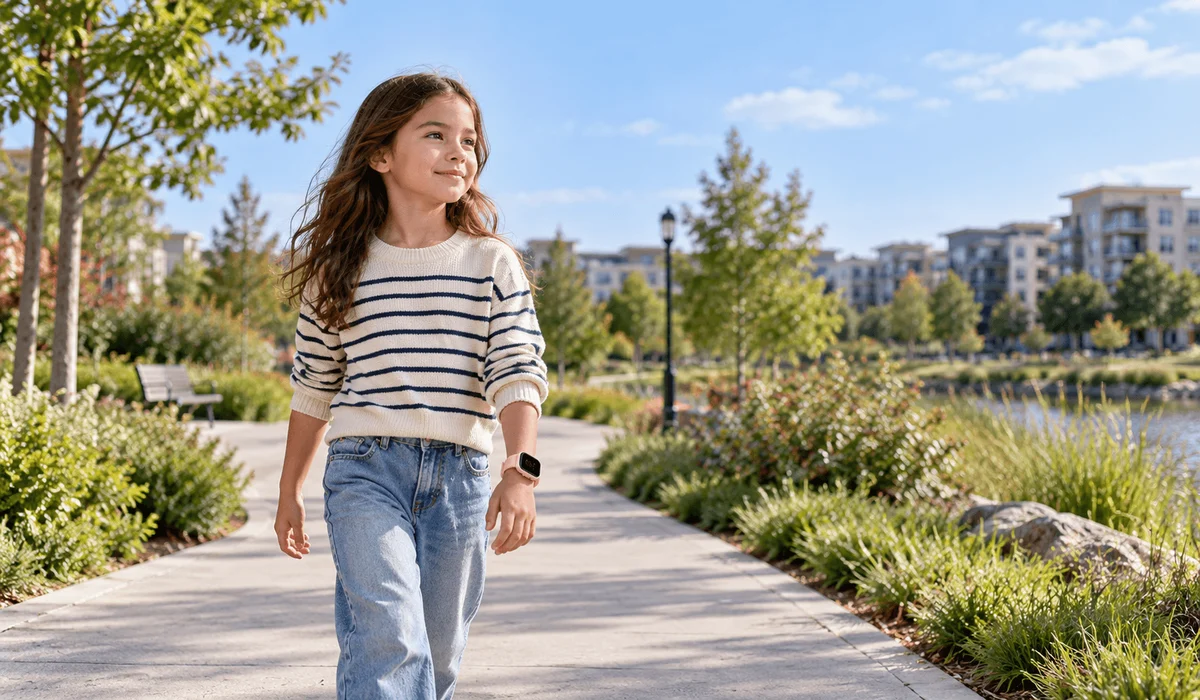
GPS, Wi-Fi and network signals can all play a role — and the environment matters too.
͏ ͏ ͏ ͏ ͏ ͏ ͏ ͏ ͏ ͏ ͏ ͏ ͏ ͏ ͏ ͏ ͏ ͏ ͏ ͏ ͏ ͏ ͏ ͏ ͏ ͏ ͏ ͏ ͏ ͏ ͏ ͏ ͏ ͏ ͏ ͏ ͏ ͏ ͏ ͏ ͏ ͏ ͏ ͏ ͏ ͏ ͏ ͏ ͏ ͏ ͏ ͏ ͏ ͏ ͏ ͏ ͏ ͏ ͏ ͏ ͏ ͏ ͏ ͏ ͏ ͏ ͏ ͏ ͏ ͏ ͏
|
Location, Explained Simply
Kids smartwatches can use different signals to estimate location, and which ones help most can depend on where the watch is being used.
Here’s the simple version.
|
|
|
Outdoors: GPS
With a clearer view of the sky, GPS can use satellite signals to estimate the watch’s location. That’s why GPS generally works best in open outdoor areas.
|
|
|
When GPS Signals Are Weaker
Inside buildings or around dense structures, satellite signals can be harder to receive. Depending on the watch and environment, nearby Wi-Fi and mobile network information can provide additional location references.
|
|
|
Why Location Can Vary
Open outdoor spaces usually provide better conditions for GPS, while walls, buildings and network conditions can make indoor location estimates less precise.
|
|
Location Gives You Context
A location check can give parents useful context about their child’s location. And when more context is needed, a quick call can often provide the rest.
|
|
|
|
|
LAGENIO · 111 Tung Chau Street, RM1710 17/F, Tai Kok Tsui, Kowloon Hong Kong SAR
|
|
|
|
 |